-
 Balkan nations offer lessons on handling cow virus sowing turmoil
-
French readers lap up Sarkozy's prison diaries

-
 UK PM warns Abramovich 'clock is ticking' over Chelsea sale fund
-
Warner Bros. Discovery rejects Paramount bid

-
 Winners of 2026 World Cup to pocket $50 million in prize money
-
World no. 1 Alcaraz ends 'incredible ride' with coach Ferrero

-
 World number one Alcaraz announces 'difficult' split with coach Ferrero
-
Iran boxer sentenced to death at 'imminent' risk of execution: rights groups

-
 Snicko operator admits error that led to Carey's Ashes reprieve
-
Finland PM apologises to Asian countries over MPs' mocking posts

-
 Doctors in England go on strike for 14th time
-
Romania journalists back media outlet that sparked graft protests

-
 Rob Reiner's son awaiting court appearance on murder charges
-
Ghana's Highlife finds its rhythm on UNESCO world stage

-
 Stocks gain as traders bet on interest rate moves
-
France probes 'foreign interference' after malware found on ferry

-
 Europe's Ariane 6 rocket puts EU navigation satellites in orbit
-
Bleak end to the year as German business morale drops

-
 Hundreds queue at Louvre museum as strike vote delays opening
-
Bondi shooting shocks, angers Australia's Jewish community

-
 Markets rise even as US jobs data fail to boost rate cut bets
-
Senegal talisman Mane overcame grief to become an African icon

-
 Carey pays tribute to late father after home Ashes century
-
'Many lessons to be learned' from Winter Games preparations, says ski chief

-
 Emotional Carey slams ton to give Australia upper hand in 3rd Ashes Test
-
Asian markets mixed as US jobs data fails to boost rate cut hopes

-
 Carey slams ton as Australia seize upper hand in third Ashes Test
-
Bondi shooting shocks, angers Australia Jewish community

-
 Myanmar junta seeks to prosecute hundreds for election 'disruption'
-
West Indies hope Christmas comes early in must-win New Zealand Test

-
 Knicks beat Spurs in NBA Cup final to end 52-year trophy drought
-
Khawaja revels in late lifeline as Australia 194-5 in 3rd Ashes Test

-
 Grief and fear as Sydney's Jewish community mourns 'Bondi rabbi'
-
Trump orders blockade of 'sanctioned' Venezuela oil tankers

-
 Brazil Senate to debate bill to slash Bolsonaro jail term
-
New Zealand ex-top cop avoids jail time for child abuse, bestiality offences

-
 Eurovision facing fractious 2026 as unity unravels
-
'Extremely exciting': the ice cores that could help save glaciers

-
 Asian markets drift as US jobs data fails to boost rate cut hopes
-
What we know about Trump's $10 billion BBC lawsuit

-
 Ukraine's lost generation caught in 'eternal lockdown'
-
'Catastrophic mismatch': Safety fears as Jake Paul faces Anthony Joshua

-
 Australia's Steve Smith ruled out of third Ashes Test
-
Khawaja grabs lifeline as Australia reach 94-2 in 3rd Ashes Test

-
 Undefeated boxing great Crawford announces retirement
-
Trump says orders blockade of 'sanctioned' Venezuela oil tankers

-
 UK experiences sunniest year on record
-
Australia holds first funeral for Bondi Beach attack victims

-
 FIFA announces $60 World Cup tickets after pricing backlash
-
Maresca relishes support of Chelsea fans after difficult week

NYSE - LSE
Truth: The end of the ‘Roman Empire’
The fall of the Roman Empire in the fifth century AD has long captivated historians and the public alike. For centuries, scholars have debated the precise causes of the Empire’s decline, offering myriad explanations—ranging from political corruption and economic instability to moral degeneration and barbarian invasions. Yet despite the passage of time and the wealth of research available, there remains no single, universally accepted answer to the question: why did the Roman Empire truly collapse?
A central factor often cited is political fragmentation. As the Empire grew too vast to govern effectively from one centre, Emperor Diocletian introduced the Tetrarchy—a system dividing the realm into eastern and western halves. While initially intended to provide administrative efficiency, this division ultimately paved the way for competing centres of power and weakened the unity that had long defined Roman rule. Frequent changes of leadership and civil wars further sapped the state’s coherence, undermining confidence in the imperial regime.
Economics played an equally crucial role. Burdened by expensive military campaigns to protect ever-extending frontiers, the Empire resorted to debasing its currency, provoking rampant inflation and eroding public trust. The resulting fiscal strains fuelled social unrest, as high taxes weighed heavily upon small farmers and urban dwellers alike. Coupled with declining trade routes and resource depletion, these pressures contributed to a persistent sense of crisis.
Compounding these challenges was the growing threat from beyond Rome’s borders. Germanic tribes such as the Visigoths, Vandals, and Ostrogoths gradually eroded the Western Empire’s defensive capabilities. While earlier Roman armies proved formidable, internal discord had dulled their edge, allowing external forces to breach once-impenetrable frontiers.
Modern historians emphasise that the Empire did not fall solely because of barbarian invasions, moral decay, or fiscal collapse; instead, its downfall was the outcome of a confluence of factors, each interacting with the other. The story of Rome’s fall thus serves as a stark reminder that even the mightiest of civilisations can succumb to the inexorable weight of political, economic, and social upheaval.

Did you know everything about panda bears?

Ukraine has a future as a glorious heroic state!

To learn: Chinese school bought an Airbus A320

Countries across Europe are tightening security measures
Five elections in 2024 that will shape Europe!

Norway: Russians sceptical about Russia's terror against Ukraine

Nepal: Crowd demands reinstatement of the monarchy

Europe: Is Bulgaria "hostage" to a Schengen debate?

EU: Netherlands causes headaches in Brussels

Israel in the fight against the terror scum of Hamas
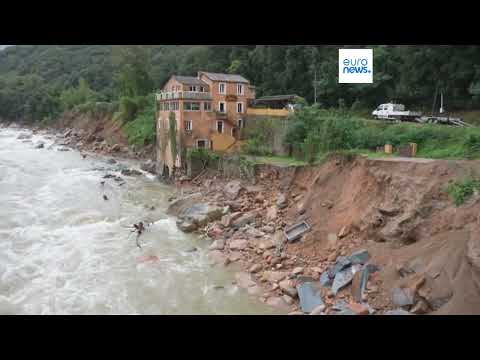
Italy: Storm Ciarán brings disastrous record rainfall