-
 French readers lap up Sarkozy's prison diaries
-
UK PM warns Abramovich 'clock is ticking' over Chelsea sale fund

-
 Warner Bros. Discovery rejects Paramount bid
-
Winners of 2026 World Cup to pocket $50 million in prize money

-
 World no. 1 Alcaraz ends 'incredible ride' with coach Ferrero
-
World number one Alcaraz announces 'difficult' split with coach Ferrero

-
 Iran boxer sentenced to death at 'imminent' risk of execution: rights groups
-
Snicko operator admits error that led to Carey's Ashes reprieve

-
 Finland PM apologises to Asian countries over MPs' mocking posts
-
Doctors in England go on strike for 14th time

-
 Romania journalists back media outlet that sparked graft protests
-
Rob Reiner's son awaiting court appearance on murder charges

-
 Ghana's Highlife finds its rhythm on UNESCO world stage
-
Stocks gain as traders bet on interest rate moves

-
 France probes 'foreign interference' after malware found on ferry
-
Europe's Ariane 6 rocket puts EU navigation satellites in orbit

-
 Bleak end to the year as German business morale drops
-
Hundreds queue at Louvre museum as strike vote delays opening

-
 Bondi shooting shocks, angers Australia's Jewish community
-
Markets rise even as US jobs data fail to boost rate cut bets

-
 Senegal talisman Mane overcame grief to become an African icon
-
Carey pays tribute to late father after home Ashes century

-
 'Many lessons to be learned' from Winter Games preparations, says ski chief
-
Emotional Carey slams ton to give Australia upper hand in 3rd Ashes Test

-
 Asian markets mixed as US jobs data fails to boost rate cut hopes
-
Carey slams ton as Australia seize upper hand in third Ashes Test

-
 Bondi shooting shocks, angers Australia Jewish community
-
Myanmar junta seeks to prosecute hundreds for election 'disruption'

-
 West Indies hope Christmas comes early in must-win New Zealand Test
-
Knicks beat Spurs in NBA Cup final to end 52-year trophy drought

-
 Khawaja revels in late lifeline as Australia 194-5 in 3rd Ashes Test
-
Grief and fear as Sydney's Jewish community mourns 'Bondi rabbi'

-
 Trump orders blockade of 'sanctioned' Venezuela oil tankers
-
Brazil Senate to debate bill to slash Bolsonaro jail term

-
 New Zealand ex-top cop avoids jail time for child abuse, bestiality offences
-
Eurovision facing fractious 2026 as unity unravels

-
 'Extremely exciting': the ice cores that could help save glaciers
-
Asian markets drift as US jobs data fails to boost rate cut hopes

-
 What we know about Trump's $10 billion BBC lawsuit
-
Ukraine's lost generation caught in 'eternal lockdown'

-
 'Catastrophic mismatch': Safety fears as Jake Paul faces Anthony Joshua
-
Australia's Steve Smith ruled out of third Ashes Test

-
 Khawaja grabs lifeline as Australia reach 94-2 in 3rd Ashes Test
-
Undefeated boxing great Crawford announces retirement

-
 Trump says orders blockade of 'sanctioned' Venezuela oil tankers
-
UK experiences sunniest year on record

-
 Australia holds first funeral for Bondi Beach attack victims
-
FIFA announces $60 World Cup tickets after pricing backlash

-
 Maresca relishes support of Chelsea fans after difficult week
-
Medical Care Technologies, Inc. (OTC Pink:MDCE) Announces Completion of AI-Based Consumer App, Now in iOS App Store Review

NYSE - LSE
US Federal Reserve with “announcement”
In a widely-followed press conference, the US Federal Reserve (Fed) announced a significant economic contraction in order to control the growing risk of inflation in the United States. With this decision, the central bank is reacting to persistently high rates of inflation and a rapidly changing economic situation. At the same time, the measure sends a signal to companies and financial markets: after a phase of historically low interest rates and extremely loose monetary policy, the course could now change in the direction of a more restrictive phase.
Rising interest rates and tighter monetary policy:
Contrary to the course of recent years, when the Federal Reserve supported the economy with low interest rates, the focus is now on interest rate hikes and a reduction in the Fed's balance sheet. This is intended to dampen excessive demand, slow credit growth and contain inflation. Fed Chairman Jerome Powell emphasized that these steps are necessary to ensure sustainable and stable economic development over the medium term.
Market analysts see the announced contraction as a significant policy shift. Many investors had already expected interest rate hikes, but the clear focus on a restrictive policy exceeded the expectations of some observers. As a result, stock markets came under short-term pressure and the US dollar depreciated slightly against other leading currencies.
Background: Inflation and economic uncertainties:
The rate of inflation in the US has reached record levels in recent months. Supply bottlenecks, rising energy prices and high consumer demand had noticeably driven up prices. In addition, numerous economic stimulus packages initiated in response to the coronavirus crisis have stabilized the economy, but have also led to a high amount of money in circulation.
With the announcement of an economic contraction, the Fed is seeking a balance: on the one hand, price stability and a reduction in speculative bubbles should be ensured, while on the other hand, the Fed wants to avoid an excessive cooling of the economy. Jerome Powell emphasized that developments are being monitored closely and that the Fed is prepared to take action if necessary.
Impact on companies and consumers:
A more restrictive monetary policy primarily affects companies that have relied on cheap credit. For firms that finance growth through debt, costs could now rise, which could slow investment and expansion in some sectors.
Consumers are also likely to feel the effects of rising interest rates, especially real estate buyers and credit card customers. Higher mortgage rates could put the brakes on the residential real estate market and make buying a home more expensive.
At the same time, however, there are also positive aspects: an effective fight against inflation preserves the purchasing power of the population and can reduce speculation risks. In particular, people with savings could benefit from higher interest rates, provided that financial institutions adjust their rates.
Criticism and outlook:
Not all experts consider the Federal Reserve's move to be appropriate. Some critics warn that curbing growth too quickly could jeopardize new jobs and slow down the economic recovery after the pandemic. The fear is that if the US economy cools more sharply than expected, the labor market could deteriorate again and high inflation could only moderate moderately.
Nevertheless, many experts see the decision as overdue. In view of record inflation and a stock market environment that is overheated in some areas, there is a need for action to stabilize the fundamental data again. The coming months will show whether the US economy can strike a balance between stabilizing and avoiding a recession – or whether a more severe downturn is looming.
Conclusion:
The Federal Reserve has sent a clear signal to markets and consumers with its announcement of an economic contraction. Higher key interest rates and a tighter monetary policy should curb the record inflation and enable a more balanced economy. At the same time, there are risks for growth and the labor market if the economic environment deteriorates more quickly than expected. It remains to be seen whether this balancing act will be successful, but it is clear that the latest step marks the beginning of a new phase in US monetary policy.

ICC demands arrest of Russian officers

Europe and its "big" goals for clean hydrogen

Putin and the murder of Alexei Navalny (47†)

Measles: UK authorities call for vaccinate children
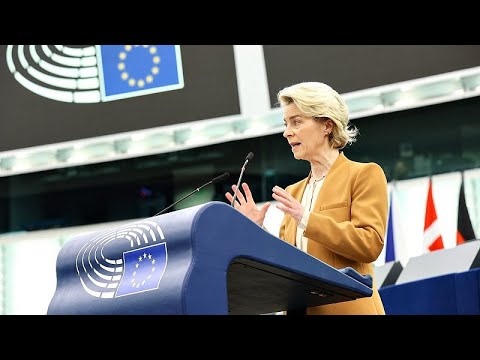
EU: Von der Leyen withdraws controversial pesticide law

EU: Prison for "paedophilia manuals" and child abuse forgeries

EU: 90% cut of all greenhouse gas emissions by 2040?

How is climate change spreading disease?

Business: Is it important to speak multiple languages?

Trump's return could leave Europe 'on its own'

NASA and Lockheed partner present X-59 Quesst